English
 Français
 عربى
عربى

A fiberglass sculpture is a three-dimensional artwork or decorative figure constructed from glass-reinforced plastic (GRP) — a composite material made by layering woven glass fibres with liquid polyester or epoxy resin. The result is a hollow, lightweight shell that is exceptionally strong, weather-resistant, and capable of reproducing fine surface detail. Costs range from under $500 for small stock pieces to $50,000 or more for large custom commissions, depending on size, complexity, and finish quality.
What Is a Fiberglass Statue — Material and Structural Definition
The term "fiberglass statue" refers to any figurative or abstract sculpture produced using glass-reinforced polymer (GRP/FRP) fabrication techniques. Unlike stone or metal casting — which produce solid or near-solid objects — a fiberglass sculpture is almost always hollow. The structural wall is typically 3–8 mm thick, composed of alternating layers of glass fibre matting and hardened resin that bond into a rigid composite shell.
This composite structure gives fiberglass a strength-to-weight ratio significantly better than concrete and comparable to aluminium, while allowing forms that would be prohibitively expensive or structurally impossible in traditional materials:
| Material | Typical Weight (1m figure) | Weather Resistance | Detail Reproduction | Relative Cost |
|---|---|---|---|---|
| Fiberglass (GRP) | 8 – 25 kg | Excellent with UV gel coat | Very high — sub-mm detail | Medium |
| Bronze | 80 – 200 kg | Excellent (patina) | Very high | Very high |
| Carved stone | 200 – 600 kg | Good (porous) | High | Very high |
| Polyresin / cold cast | 5 – 18 kg | Fair (indoor preferred) | High | Low–Medium |
| Concrete / GFRC | 60 – 180 kg | Very good | Medium | Low |
The hollow construction makes fiberglass practical for large-scale installations — a 3-metre human figure in fiberglass weighs roughly 40–70 kg and can be installed by two people with basic rigging, whereas the same figure in bronze would require a crane and structural foundation engineered for 400–600 kg.
How Are Fiberglass Sculptures Made — The Full Production Process
Professional fiberglass sculpture fabrication follows a consistent sequence regardless of subject matter or scale. Understanding each stage helps buyers evaluate quality and anticipate production timelines.
The sculpture begins as an original in clay, foam, or sculpted wax — or in some studios, as a 3D-printed form from a digital model. Clay allows the finest surface texture work; foam carving is faster for large abstract pieces. This stage typically takes 2–8 weeks depending on complexity.
A negative mould is made over the original, usually in silicone rubber (for fine detail and complex undercuts) backed by a rigid fibreglass jacket (the "mother mould"). A 1-metre figure typically requires a 4–8 piece mould to allow demolding without distortion. Mould production adds 1–3 weeks and is the largest single cost driver for custom commissions.
The interior mould surface is first treated with a release agent, then sprayed with a pigmented gel coat — a thick, UV-resistant polyester resin layer 0.4–0.8 mm thick. This becomes the outermost surface of the finished sculpture and determines base colour and texture quality. White and neutral gel coats are standard for painted finishes; coloured gels are used when the surface is to be left translucent.
Glass fibre matting — either chopped strand mat (CSM) at 300–450 g/m2 or woven roving for structural sections — is laid into the mould over the gel coat and saturated with catalysed polyester or vinyl ester resin. Typically 3–6 layers are applied, building a wall thickness of 4–8 mm. Structural sections (limbs, connection points, bases) receive additional reinforcement.
The laminate cures at ambient temperature in 4–24 hours depending on resin system and room temperature. After full cure (typically 48–72 hours), the mould sections are carefully separated. Internal steel armature points or threaded inserts for base mounting are added before final sections are bonded together with resin paste.
Seams are ground flush, pin holes filled with polyester filler, and the surface sanded through progressive grits (80 to 400 grit) before priming. Final finishing options range from automotive-grade paint systems to hand-applied patinas, metallic powder coatings, mosaic tile inlay, or raw gel coat polish.
How Much Does a Fiberglass Sculpture Cost — A Realistic Price Guide
Pricing varies enormously based on whether the piece is a stock production item or a bespoke commission, and on what finishing level is specified. The following ranges reflect current market pricing from professional studios:
| Category | Size / Description | Price Range (USD) | What Drives Cost |
|---|---|---|---|
| Small stock figures | 30 – 60 cm, standard finish | $200 – $800 | Mould amortised over large run; simple painting |
| Medium stock or semi-custom | 60 cm – 1.2 m, painted | $800 – $4,000 | More material, complex paint; light customisation (colour, base) |
| Life-size figures (stock) | 1.6 – 2 m, standard pose | $3,000 – $10,000 | High material volume; specialist finishing common |
| Large custom commission | 2 – 5 m, unique sculpt | $12,000 – $50,000 | Original model + full mould tooling; artist time; structural engineering |
| Monumental / architectural | 5 m+, site-specific | $50,000 – $300,000+ | Engineering, transport, installation, planning approvals |
A frequently cited reference point: a life-size fiberglass athlete figure for retail or sports venue display — a common commercial application — typically runs $4,000–$8,000 fully painted and mounted, including shipping crate. Custom portrait sculpture from digital scan to finished 1.8 m figure starts at approximately $15,000–$25,000 at most professional studios.
What inflates or reduces the quote
Several variables move the price significantly within any size category:
- Mould cost allocation: For a one-off, the full mould cost (often $2,000–$8,000 for a life-size figure) falls on a single piece. For a run of 20+ identical pieces, the mould cost per unit drops to $100–$400 — the most important factor in making repeated-figure installations affordable.
- Surface finish complexity: A flat single-colour paint finish adds roughly $200–$600 to a life-size figure. A realistic skin tone with shading, ageing effects, metallic patina simulation, or mirror-polished chrome finish adds $1,500–$6,000 in finishing labour alone.
- Structural requirements: Indoor display pieces need only a basic base plate. Outdoor or elevated sculptures require internal steel armature, galvanised fixings, and engineered base foundations — adding $500–$5,000 depending on wind-load calculations and site conditions.
- Geographic location of studio: Studios in China, Vietnam, and Eastern Europe typically quote 40–65% lower than equivalent work in North America or Western Europe for the same specification — though shipping costs (typically $300–$1,500 per large crate) partially offset this.
Surface Finishes Available for Fiberglass Sculptures
The finish applied to a fiberglass sculpture determines its visual character, maintenance requirements, and suitability for different environments. Common professional finishing options include:
| Finish Type | Appearance | Suitable For | Maintenance |
|---|---|---|---|
| Automotive polyurethane paint | High-gloss or satin, any colour | Indoor and sheltered outdoor | Wax annually; touch up chips |
| Bronze patina simulation | Realistic aged bronze with verdigris | Outdoor monuments, memorials | Annual wax; re-patina every 5–10 years |
| Chrome / mirror powder coat | Highly reflective metallic | Indoor display, event pieces | Keep dry; polish with soft cloth |
| Stone effect (faux granite/marble) | Textured, matte natural stone look | Garden, landscape, public space | Low — UV-stable topcoat |
| Hand-painted realistic | Detailed skin, fabric, and feature colouring | Retail, museum display, themed environments | Periodic re-touch; UV-protective clear coat advised |
| Raw gel coat (polished) | Smooth, semi-gloss monochrome | Contemporary art, gallery | Low — polish with cutting compound as needed |
Outdoor Durability — What to Specify for Long-Term Installation
Fiberglass performs well outdoors when correctly specified. The primary failure modes — UV yellowing, surface crazing, and colour fade — are all preventable with the right material choices at fabrication stage:
- UV-stabilised isophthalic gel coat: Standard orthophthalic gel coats yellow and chalk within 2–5 years of sun exposure. Isophthalic gel coats with UV inhibitor package resist yellowing for 10–15 years. Specify this for any outdoor piece and ask for a data sheet confirming the resin type.
- UV-stable topcoat: A two-pack polyurethane clear coat applied over the painted finish adds a further UV barrier and a hard scratch-resistant surface. This is the single most effective step to extend the visual life of painted outdoor sculpture.
- Internal drainage: Hollow sculptures installed outdoors must have drainage holes at the lowest points — typically 6–10 mm diameter — to prevent water pooling inside, which causes freeze-thaw cracking in cold climates and accelerates internal corrosion of any steel armature.
- 316 stainless steel or hot-dip galvanised fixings: Any metal hardware embedded in or attached to an outdoor fiberglass sculpture should be marine-grade stainless or hot-dip galvanised. Mild steel fixings corrode within 3–7 years and expand as they rust, splitting the fiberglass laminate from the inside.
- Vandal-resistant finishes for public spaces: Anti-graffiti clear coat systems (sacrificial or permanent) are available for public sculptures. Sacrificial systems allow graffiti removal with a targeted solvent without damaging the underlying paint; permanent systems create a surface from which paint does not bond.
Common Applications — Where Fiberglass Sculptures Are Used
The combination of design freedom, weather resistance, and relatively accessible cost has made fiberglass the dominant material across several sculpture application categories:
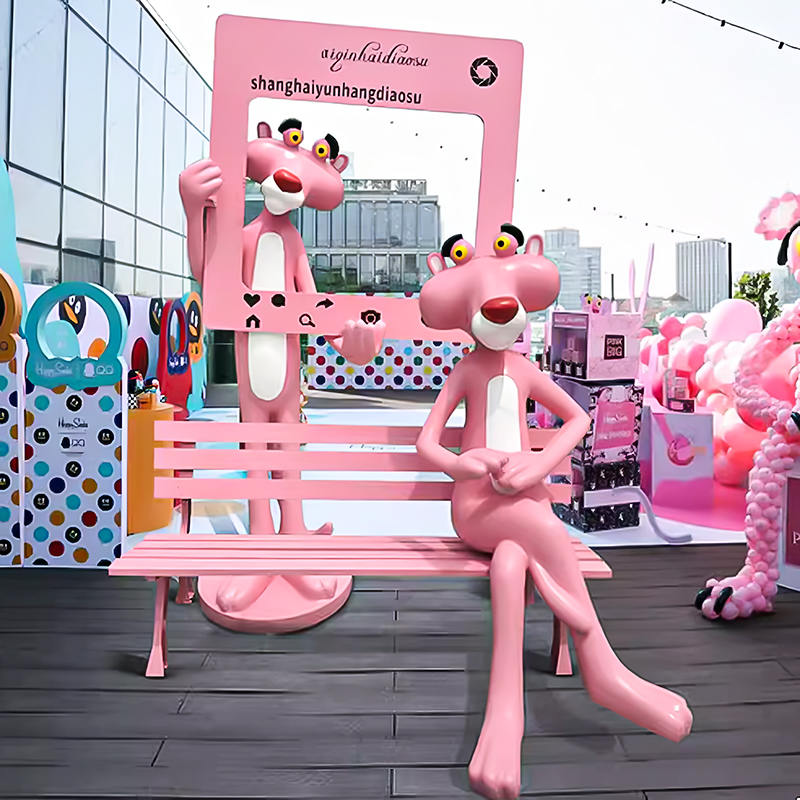
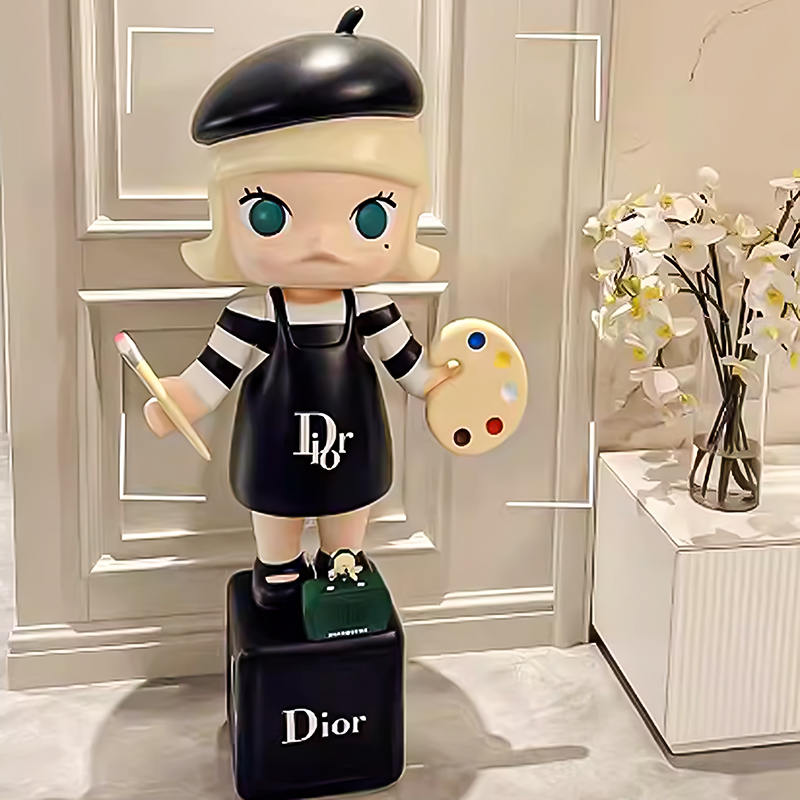
- Retail and commercial display: Life-size figures, product mascots, and oversized product replicas for showrooms, shopping centres, and trade exhibitions. Fiberglass allows the production of 20–50 identical figures from a single mould — a typical retail chain deployment scenario.
- Theme parks and entertainment venues: Character sculptures, themed environmental pieces, and architectural decorative elements. The lightweight nature of fiberglass simplifies installation on elevated structures and reduces load on building frameworks.
- Public monuments and memorials: Commemorative figures, wildlife sculptures, and civic art installations where bronze appearance is desired at a fraction of the material cost. A life-size bronze-effect fiberglass war memorial figure costs approximately 15–25% of an equivalent sand-cast bronze piece.
- Garden and landscape sculpture: Animal figures, abstract garden art, and architectural decorative elements. Properly finished fiberglass outperforms polyresin and concrete in freeze-thaw environments and resists algae growth better than porous stone.
- Hospitality and themed interiors: Hotel lobbies, restaurants, and museum installations where oversized or highly detailed figures create immersive environments. The ability to create any surface texture — including realistic skin, fabric, feathers, or bark — makes fiberglass unrivalled for themed environment work.
Buying Guide — Questions to Ask Before Commissioning
Whether purchasing a stock piece or commissioning original work, these questions identify suppliers capable of delivering production-quality results:
- What resin system is used — orthophthalic, isophthalic, or vinyl ester polyester? (Isophthalic minimum for outdoor work.)
- What is the wall thickness at structural points, and is internal steel armature included for pieces over 1.5 m?
- What topcoat system is applied over the paint — single-pack acrylic or two-pack polyurethane?
- Can you provide references or installed examples of outdoor pieces that are 5 or more years old?
- Does the quote include internal drainage provisions and base mounting hardware?
- What warranty is offered on structural integrity and surface finish?
- Is the mould retained after production, and what is the cost to reorder from the same mould?