English
 Français
 عربى
عربى

A cartoon sculpture is absolutely a work of art — one that combines the expressive language of illustration with the physical presence of three-dimensional form. Yes, sculptures are recognized artworks; yes, they can and often should be painted; and sculpting a cartoon face follows a distinct set of principles rooted in exaggeration, proportion, and character. Whether you are a collector, a student, or a working artist, this guide covers the craft and meaning of cartoon sculpture in full.
Are Sculptures Artwork?
Yes — sculpture is one of the oldest and most respected categories of visual art in human history. It predates painting on canvas by thousands of years: the Venus of Willendorf figurine dates to approximately 25,000 BCE, and the Lion-Man of the Hohlenstein-Stadel, considered one of the earliest known figurative sculptures, is estimated at 40,000 years old. Sculpture is not a secondary or lesser form of art — in many art historical periods it was considered the highest form.
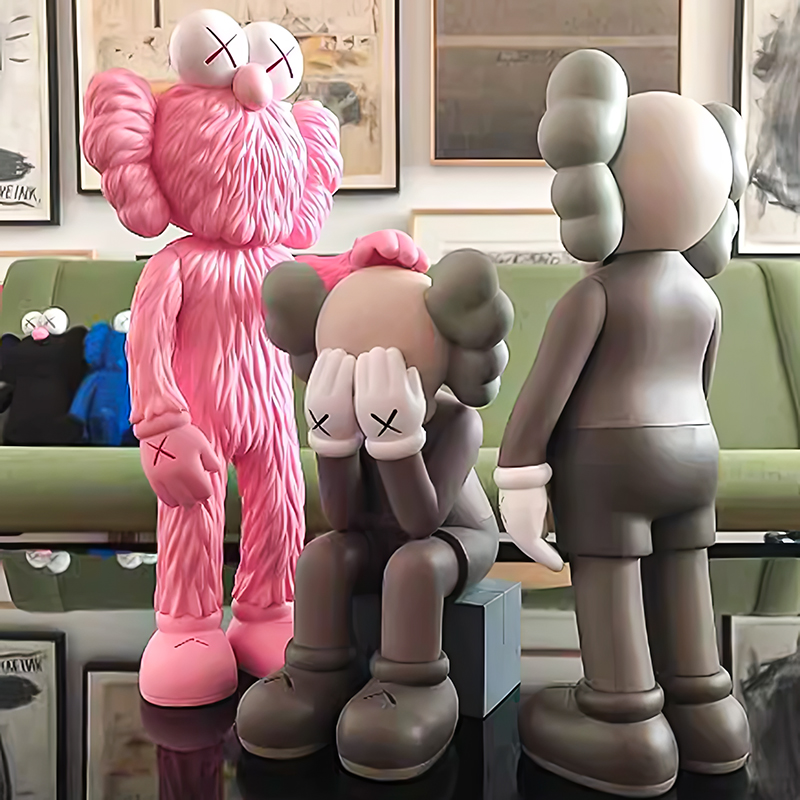
In contemporary art markets, sculpture commands significant value. At auction, three-dimensional works consistently outperform two-dimensional pieces at comparable career stages. Jeff Koons' stainless steel Rabbit sold for $91.1 million in 2019, setting a record for a living artist at that time. Cartoon-influenced sculpture, pioneered by artists like Koons and later Takashi Murakami and KAWS, has become one of the most commercially and critically active segments of the contemporary art market.
What Qualifies Cartoon Sculpture as Fine Art?
The debate over whether cartoon-derived imagery belongs in fine art is largely settled in favor of inclusion. The Pop Art movement of the 1960s — led by Andy Warhol, Roy Lichtenstein, and Claes Oldenburg — permanently broke down the distinction between "high" and "low" cultural imagery. A sculpture based on a cartoon character carries the same potential for artistic meaning as one depicting a classical figure. What determines its status as art is intentionality, craft, and conceptual depth — not the source material.
- Intentionality: The artist makes deliberate choices about form, material, scale, and meaning — not simply reproducing an image.
- Craft: Technical skill in modeling, casting, finishing, or fabricating the physical object elevates the work beyond a commercial product.
- Conceptual depth: The best cartoon sculptures use familiar imagery to comment on culture, childhood, consumerism, identity, or emotion in ways that resonate beyond the surface.
- Presentation context: Placement in a gallery, public space, or collection signals artistic intent and invites critical engagement.
Can Sculptures Be Painted?
Yes — painting sculpture is a practice with roots stretching back to ancient Greece and Rome, and it is standard practice in cartoon sculpture specifically. The assumption that classical sculpture is naturally white marble is largely incorrect: most ancient Greek statues were vibrantly polychrome, painted in red, blue, gold, and flesh tones. The paint simply did not survive the centuries.
In cartoon sculpture, color is not optional — it is essential. The bold, flat color palettes of cartoon aesthetics are a core part of what makes the form recognizable and emotionally immediate. Painting a cartoon sculpture is where the character truly comes to life.
Paint Types by Sculpture Material
| Sculpture Material | Recommended Paint Type | Finish Options |
|---|---|---|
| Polymer clay (Fimo, Sculpey) | Acrylic paint | Matte, satin, gloss varnish |
| Air-dry clay | Acrylic paint | Matte or satin; seal with varnish |
| Resin (cast) | Acrylic or enamel paint | High-gloss enamel for toy-like finish |
| Plaster | Acrylic paint (prime first) | Matte or gloss over gesso primer |
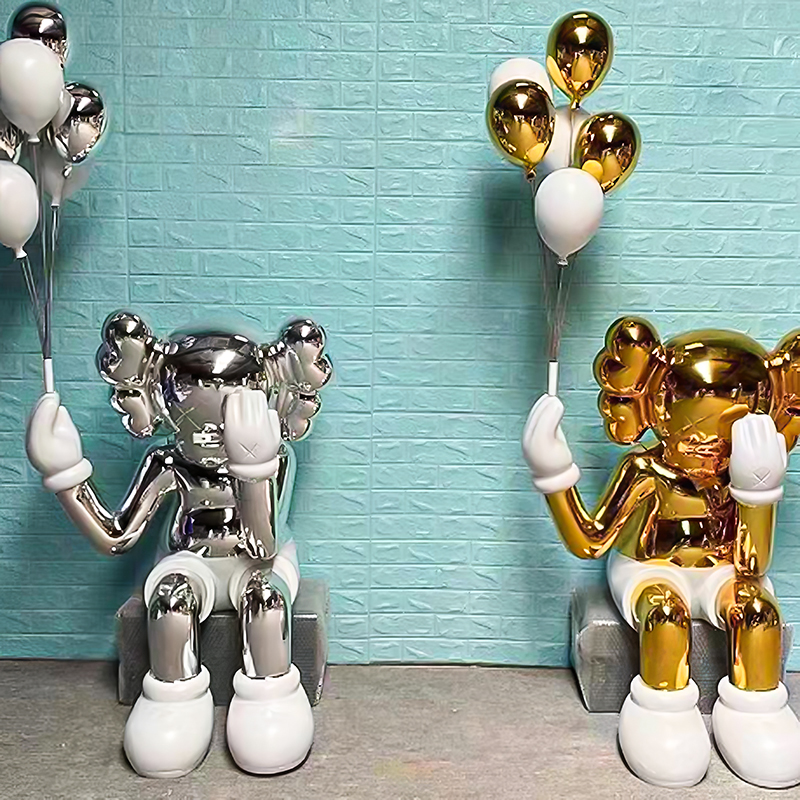
| Fiberglass | Automotive or industrial enamel | Mirror gloss, powder coat effect |
| Wood | Acrylic or oil paint | Matte or varnished finish |
| Bronze or metal | Patina chemicals or enamel paint | Chemical patina, lacquer seal |
Painting Techniques for Cartoon Sculpture
Cartoon sculpture typically uses painting approaches that emphasize clean, flat color areas and bold outlines — echoing the visual language of animation cels and comic illustration. Key techniques include:
- Flat base coat: Apply an even, opaque base color using thin layers of acrylic. Multiple thin coats produce smoother coverage than one thick coat and prevent cracking on flexible materials.
- Black outline work: A fine brush or paint pen is used to define edges and features, mimicking the ink outlines of cartoon illustration. Pen width of 0.3–0.5 mm is standard for medium-scale pieces.
- Cell shading: Instead of blended gradients, shadows are painted as flat darker blocks — a technique borrowed directly from traditional animation that gives sculptures a graphic, illustrated quality.
- Gloss sealing: Many cartoon sculptures are finished with a high-gloss varnish or resin coat, giving them the shiny, plastic appearance associated with toys and commercial figurines. This also protects the paint layer from chipping and UV fading.
How to Sculpt a Cartoon Face
Sculpting a cartoon face is fundamentally different from sculpting a realistic portrait. Where realism demands accurate anatomy, cartoon sculpting demands exaggeration, simplification, and emotional clarity. The goal is not to replicate how a face looks, but to amplify how it feels.
Core Principles of Cartoon Face Proportions
Cartoon faces deviate deliberately from realistic human proportions to create appeal and expressiveness. Understanding these deviations is the first step:
| Feature | Realistic Proportion | Cartoon Proportion |
|---|---|---|
| Eyes | Midpoint of the head | Below midpoint; often oversized (up to 30% of face height) |
| Forehead | Equal to mid-face zone | Enlarged; may take up 40-50% of head height |
| Nose | One-third of face height | Simplified or minimal; dot, button, or stub |
| Mouth | Narrow to medium width | Wide; expressive; often simplified to a curve or arc |
| Chin / jaw | Angular or defined | Rounded; soft; reduced in size |
| Ears | Aligned with eye/nose zone | Often oversized or stylized for character identity |
Step-by-Step: Building a Cartoon Face in Clay
- Start with a sphere: Form the base head as a smooth ball of clay. Most cartoon heads are rounder and wider than realistic heads — aim for a width-to-height ratio of approximately 1:1.1 rather than the realistic 1:1.4.
- Flatten the face plane: Gently press the front of the sphere to create a flat face plane. This prevents features from wrapping around the curve and makes them more directly readable from the front.
- Mark the eye line low: Place a horizontal guide line about 40% up from the chin — lower than you would for a realistic face. Cartoon eyes sit in the lower half of the head, which enlarges the forehead and creates a youthful, appealing look.
- Build up the eye mounds: Rather than carving eyes, build up oval or circular mounds of clay for the eye area first. Cartoon eyes are typically raised and prominent. For large eyes, the iris alone may be 20–25% of the total face width.
- Add the nose last and keep it minimal: A button nose — a small ball or flattened oval — is sufficient for most cartoon styles. Avoid sculpting nostrils and bridges in realistic detail; simplification is more expressive.
- Exaggerate the mouth for emotion: The mouth defines the character's emotional state. A wide, simple arc for happiness; a downturned curve for sadness; an open O-shape for surprise. Keep the lips simplified or absent unless the style calls for them.
- Round all edges: Cartoon forms avoid sharp angles. After placing each feature, blend and smooth the transition into the surrounding surface using a silicone blending tool or dampened fingertip.
- Check from multiple angles: A cartoon face that reads well from the front may look flat or unconvincing in three-quarter view. Rotate the piece frequently and adjust until it reads consistently from all viewing angles.
Materials Recommended for Beginner Cartoon Sculpting
| Material | Best For | Working Time | Hardening Method |
|---|---|---|---|
| Polymer clay (Sculpey III) | Small figures, detailed work | Indefinite until baked | Oven bake at 130°C (275°F) |
| Air-dry clay (DAS) | Larger pieces, budget-friendly | 30-60 min before surface dries | Air dry 24-72 hours |
| Oil-based clay (Chavant) | Prototypes, mold masters | Indefinite (does not harden) | Does not harden; used for casting |
| Epoxy sculpting putty (Milliput) | Hard, durable small pieces | 60-90 min working time | Air cure in 3-4 hours |
| Digital (ZBrush) for 3D printing | Reproduction, complex geometry | Unlimited | FDM or resin 3D print |
Why Sculpture Art Matters
Sculpture occupies a unique role in art that two-dimensional work cannot fully replicate: it exists in real space alongside the viewer. A painting creates an illusion of depth on a flat surface; a sculpture inhabits the same physical world you do. This presence generates a fundamentally different kind of engagement — you can walk around it, see it change as light shifts, and feel its scale relative to your own body.
Why Cartoon Sculpture in Particular Has Cultural Power
Cartoon imagery is the visual language of childhood and collective memory. When a cartoon character is rendered in three dimensions at human scale or larger, it triggers a distinctive psychological response — familiarity made strange, childhood made monumental. Artists like KAWS have leveraged this effect to build one of the most globally recognized contemporary art practices of the past two decades, with works selling at Sotheby's for over $14.7 million and public installations viewed by millions across New York, Hong Kong, and Seoul.
The cultural significance of cartoon sculpture extends beyond the gallery:
- Accessibility: Cartoon imagery invites viewers who might feel excluded from traditional fine art spaces. Familiar visual language lowers the barrier to engagement.
- Nostalgia as a critical tool: Transforming childhood icons into monumental or museum-quality sculptures prompts reflection on consumerism, mass media, and the commercialization of imagination.
- Cross-cultural legibility: Cartoon visual codes — simplified faces, bold colors, exaggerated expressions — transcend language barriers more readily than realistic or abstract art, giving cartoon sculpture unusual global reach.
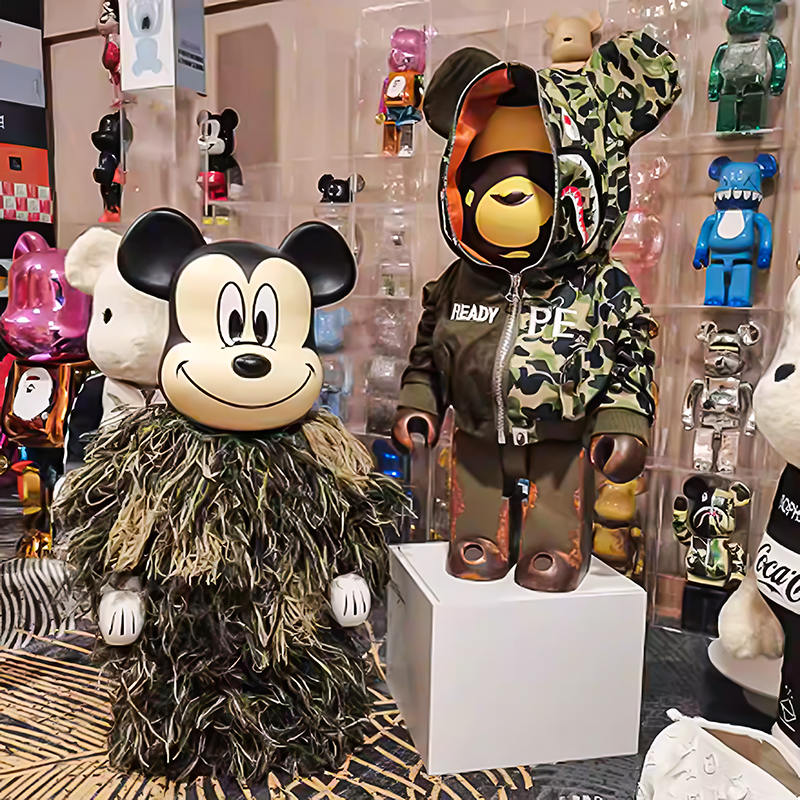
- The toy-to-art pipeline: The limited-edition designer toy movement, pioneered in Hong Kong and Japan in the late 1990s, demonstrated that cartoon sculpture could function simultaneously as collectible product and fine art object — a model now widely adopted across the art and design industries.
Sculpture as a Lasting Medium
Unlike works on paper or canvas, sculpture in durable materials — bronze, stone, high-density resin, stainless steel — survives for centuries. The cartoon sculptures being made today in professional-grade materials are physical objects that, if properly cared for, will outlast their creators. This longevity is part of what elevates sculpture from decoration to art: it is an act of making something permanent in a world of ephemeral images.